
Mining formalization in Congress: what is being discussed and what it means for miners
·
By

In recent weeks it has been said that mining formalization is about to change fundamentally. We analyzed the texts of the bills and the news is only partly true: there are initiatives in Congress, one already approved in first debate, but none is law, the text can still change, and a good part of what is proposed already exists in current regulations (as of the cutoff date of this publication).
Here we explain how many bills there are and what chances they have, what really changes with Bill 117 of 2026 (House), what Peru teaches us, and what miners who want to formalize should do today.
How many bills there are and what chances they have
Three initiatives are currently moving forward, but in practice they are two proposals: Bill 117 of 2026 (House) (with its Senate twin, Bill 109, the same bill with the same title) and Bill 368 of 2026 (House).
Bills in progress (cutoff: October 29, 2026)
| Bill | Who is promoting it | Status (Oct 29, 2026) | Chances |
|---|---|---|---|
| Bill 117 of 2026 (House) | Centro Democrático and allies in the government coalition; backed by the Government | Approved in first debate in the Fifth Committee of the House (Oct 24); the plenary session is next | Real: it has the Government’s backing and advanced quickly. Three debates remain, the text may change, and the Constitutional Court is likely to review issues such as mining with “yellow” heavy machinery before the environmental license |
| Bill 109 of 2026 (Senate) | Ten senators from the same political side | In the Fifth Committee of the Senate, no known rapporteur’s report | Dependent on Bill 117: the two are likely to be processed together when it reaches the Senate |
| Bill 368 of 2026 (House) | Representative Juan Carlos Vargas Soler (peace seat for Bolívar and Antioquia) | Filed on September 16; in committee, no known rapporteur’s report | Low as a stand-alone bill; it may be merged with Bill 117 or contribute articles to it |
The previous government’s general mining law (July 28, 2026), with a regime for small-scale mining, has also been filed. With the current government we do not consider that it has any real chance of advancing and we do not analyze it here.
The calendar. If Bill 117 does not complete its four debates before June 20, 2028, it is shelved. After that come presidential assent, regulation (with deadlines of one to six months for several agencies) and, very likely, lawsuits before the Court. No miner should plan their operation counting on the new route in the short term.
What Bill 117 proposes and what really changes
The bill does not create a new regime: it builds on Law 2250 of 2022 and keeps its central requirement, demonstrating at least ten years of work in the area before July 2022. What changes is the order of the route.
The three-phase route of Bill 117
| Phase | Duration | What is required |
|---|---|---|
| Registration | At the start | Register with a Single Window and sign, under oath, the Basic Mining and Environmental Care Plan (PMCAB) |
| 1. Immediate Temporary Mining Permit (PITE) | Up to 1 year | Zero mercury, minimum environmental management, signage, personal protective equipment and filing of the PTOD. Mining and the use of machinery are allowed |
| 2. Transition Mining Permit (PPT) | 6 months, extendable for another 6 | Carry out the PTOD and submit the Environmental Impact Study for Formalization. If the authority does not decide in time, the file goes to the oversight bodies |
| 3. Environmental License for Formalization | At the end | Verification of technical, environmental and social compliance |
What is truly new:
- Mining takes place before the license. Today Law 2250 prohibits it without the ANM’s formalization act and the Temporary Environmental License. Bill 117 allows it from step 1, by signing a form.
- Protection of equipment and machinery of the registered miner while moving through the phases.
- Processing only at authorized plants, within a title, with a Processing Certificate of Origin per batch issued by the title holder.
- Regional environmental studies (“Homogeneous Zones”) carried out by the authority, as a baseline.
- Transitional Coexistence Agreement with the title holder when the miner works within a title.
What already exists and is presented as new. The mercury ban has been in force since 2018 (Law 1658 of 2013). The Differential Work and Works Plan, the purchase of gold by the Bank of the Republic and the Mining Development Fund are already in Law 2250. The agreement with the title holder already exists as a formalization subcontract, and the temporary environmental license already has short deadlines (Resolution 1830 of 2024).
What the text does not resolve. It does not say what happens if the authority fails to decide the second phase, sets no grounds for losing the temporary permit or limit on its repetition, and does not define who is liable for environmental damage within a title. In addition, the per-batch certificate overlaps with the Mineral Traceability Platform, which begins to apply in stages on November 19, 2026.
The lesson from Peru
Peru is precisely moving away from the scheme that Bill 117 proposes to install in Colombia. For more than two decades it has allowed miners to keep operating while they formalize and, since late 2016, it has done so with a temporary registry, REINFO. In eight years about 2.4% of some 84,000 registrants were formalized, the registry was extended again and again and, in a good number of documented cases, it was used to pass illegal gold off as legal.
On October 19, 2026 the Peruvian Government submitted the MAPE bill (Small-Scale and Artisanal Mining Law) to close that cycle. It is also only a bill, but its direction is clear:
- It closes the door. REINFO ends on December 31, 2026. Only current registrants (about 31,500) move into a temporary consolidation regime, with an end date in mid-2028.
- For newcomers, license first. Anyone starting afterwards needs authorization and environmental certification before operating.
- It rewards the title holder who contracts. With a mining contract of at least three years, the holder pays less to maintain the concession and is exempt from penalties.
- It shares responsibilities. With a contract, the miner is liable for environmental damage; without a contract, the title holder is jointly liable if participation is proven.
- A single entity (FORMAPE) authorizes, evaluates, handles traceability and sanctions.
Peru and Colombia side by side
| Topic | MAPE Law (Peru) | Bill 117 (Colombia) | Law 2250 in force (Colombia) |
|---|---|---|---|
| Is there mining before the license? | Only those already registered, with an end date; new entrants, no | Yes, from the temporary permit | No |
| Who enters the regime? | Closed list | Traditional miners with 10 years, no closed list | Traditional miners with 10 years |
| Machinery | Not regulated | From the first phase | Only with a temporary environmental license |
| Relationship with the title holder | Contract with incentives and clear responsibilities | Agreement without minimum content and mandatory processing at the title holder’s plant | Formalization subcontract of 4 years or more |
| Responsible entity | A single one, with sanctioning power | A window that coordinates several entities | ANM, environmental authority and municipalities separately |
| Mercury | Gradual phase-out | Immediate elimination | Prohibited since 2018 |
What can we draw from this comparison?
- Too much: the permit to mine without an open environmental assessment for new registrants, machinery from the first phase and a second certificate of origin that duplicates traceability. These are the features that in Peru ended up favoring those who did not want to formalize but to stay in the transition regime.
- Missing: closing the universe of beneficiaries with a final date without extensions, rewarding the title holder who signs agreements with miners, defining who is liable for environmental damage and giving a single authority the ability to decide on time.
- Colombia already has what Peru does not yet: mercury banned since 2018, the formalization subcontract with PTOC and license, and the rule of not mining without a temporary environmental license. They are worth keeping.
What really matters to miners committed to formalizing
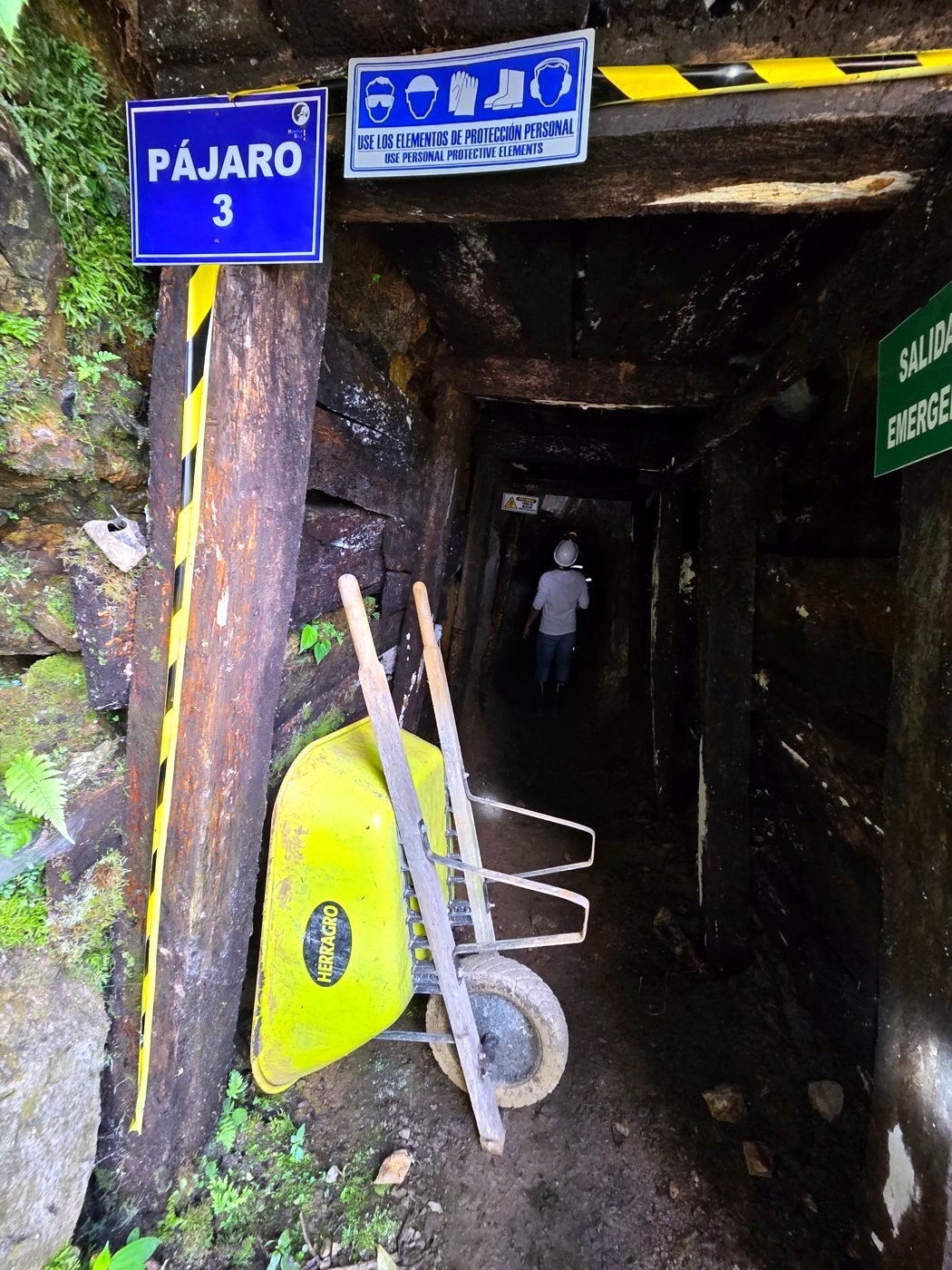
Our recommendation is not to stop anything while waiting for the new law. Everything that current regulations require today is what you will need if Bill 117 is approved, and the current route gives more security today than a temporary permit subject to changes in Congress and review by the Court.
- Continue your current process (formalization subcontract, special reserve area, return of areas or contract proposal with differential requirements) before the ANM and the environmental authority.
- Secure proof of your mining tradition. The ten years remain the entry requirement. Gather documents, records, dated photographs and testimonies of your work from before July 2012.
- Eliminate mercury and document it. It has been mandatory since 2018 and would be an entry condition on the new route.
- Organize your technical information (work fronts, coordinates, method and production): it is the basis of the PTOD or PTOC you will be asked for in any scenario.
- Look after the relationship with the title holder if you work within a title. Negotiate clear terms on area, duration, processing of the mineral and responsibilities.
- Prepare for traceability: RUCOM, certificate of origin and biometric registration on the Mineral Traceability Platform, which begins in stages on November 19, 2026 (for special reserve areas, legalizations and subcontracts, August 18, 2028).
At Grupo Cascada we support miners and title holders at every stage of formalization: diagnosis of the right instrument, PTOD and PTOC, temporary environmental license, negotiation with title holders, management of social risks with the community, and occupational health and safety with our ally IQ Risk. We will follow the progress of these bills and inform our clients of every relevant change. Write to us at contacto@grupocascada.net.
Sources: House of Representatives: text of Bill 117 of 2026, bill file and approval in the Fifth Committee, Oct 24, 2026 · Bill 109 of 2026 (Senate) (Normograma) · House of Representatives: file of Bill 368 of 2026 and profile of Representative Juan Carlos Vargas Soler · El Oriente, Oct 6, 2026: Government backing for the bill · La Silla Vacía: filing of the previous government’s mining law · Law 2250 of 2022 and Resolution 1830 of 2024 of MinAmbiente · ANM: mineral traceability · Peru: MAPE Bill, Motion 00608-2026-2031-CD, La República (Peru), Oct 20, 2026, ProActivo: 2.4% formalized in REINFO and El Tiempo (Piura): use of REINFO to launder gold
Ready to take the next step?
Tell us your challenge and let’s design the solution together.